
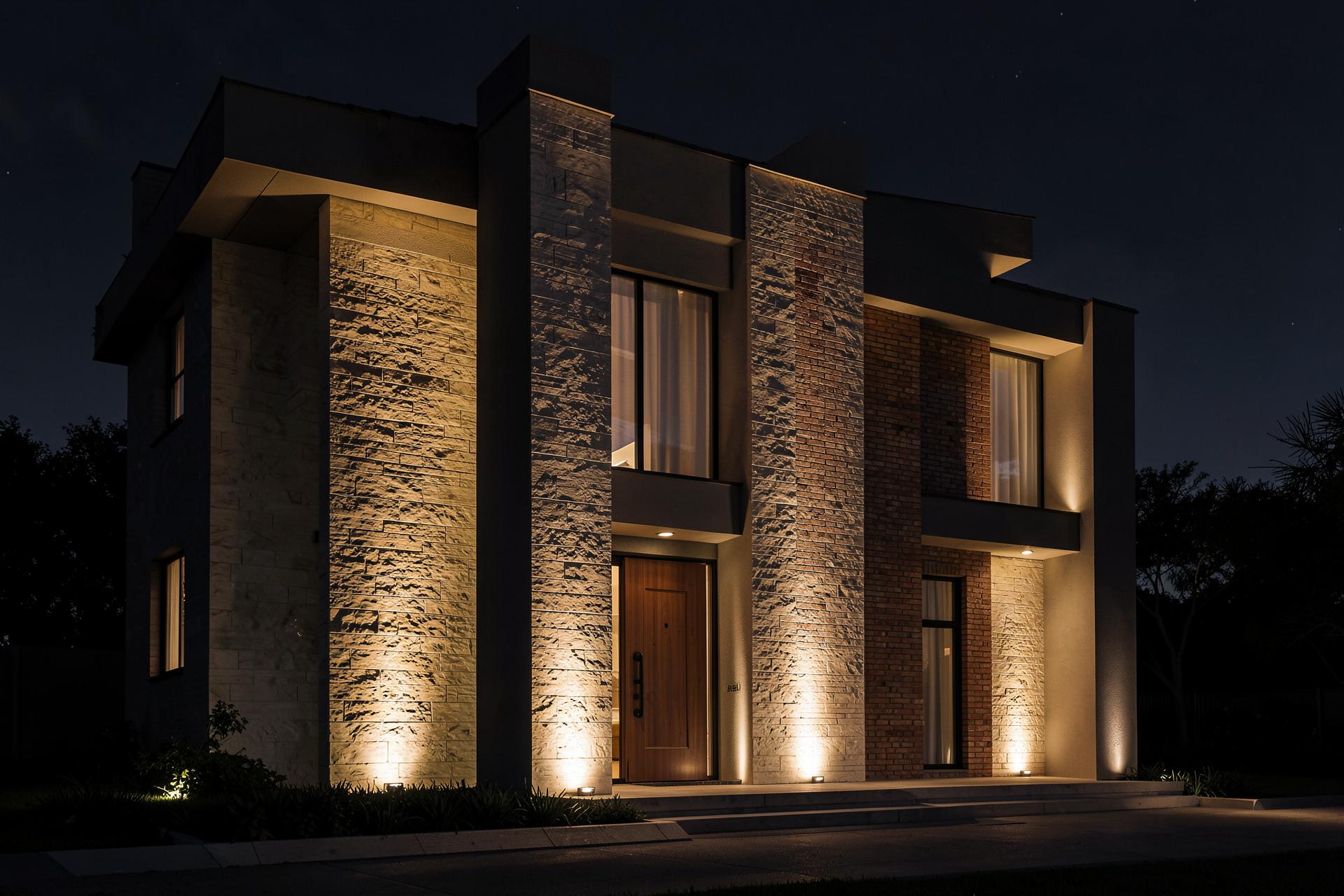
Architectural lighting · Houston
Light the structure. Nothing else.
Restrained, precisely aimed fixtures that reveal facade texture, proportion, and detail after dark.
Technique
Where the fixture sits changes everything.
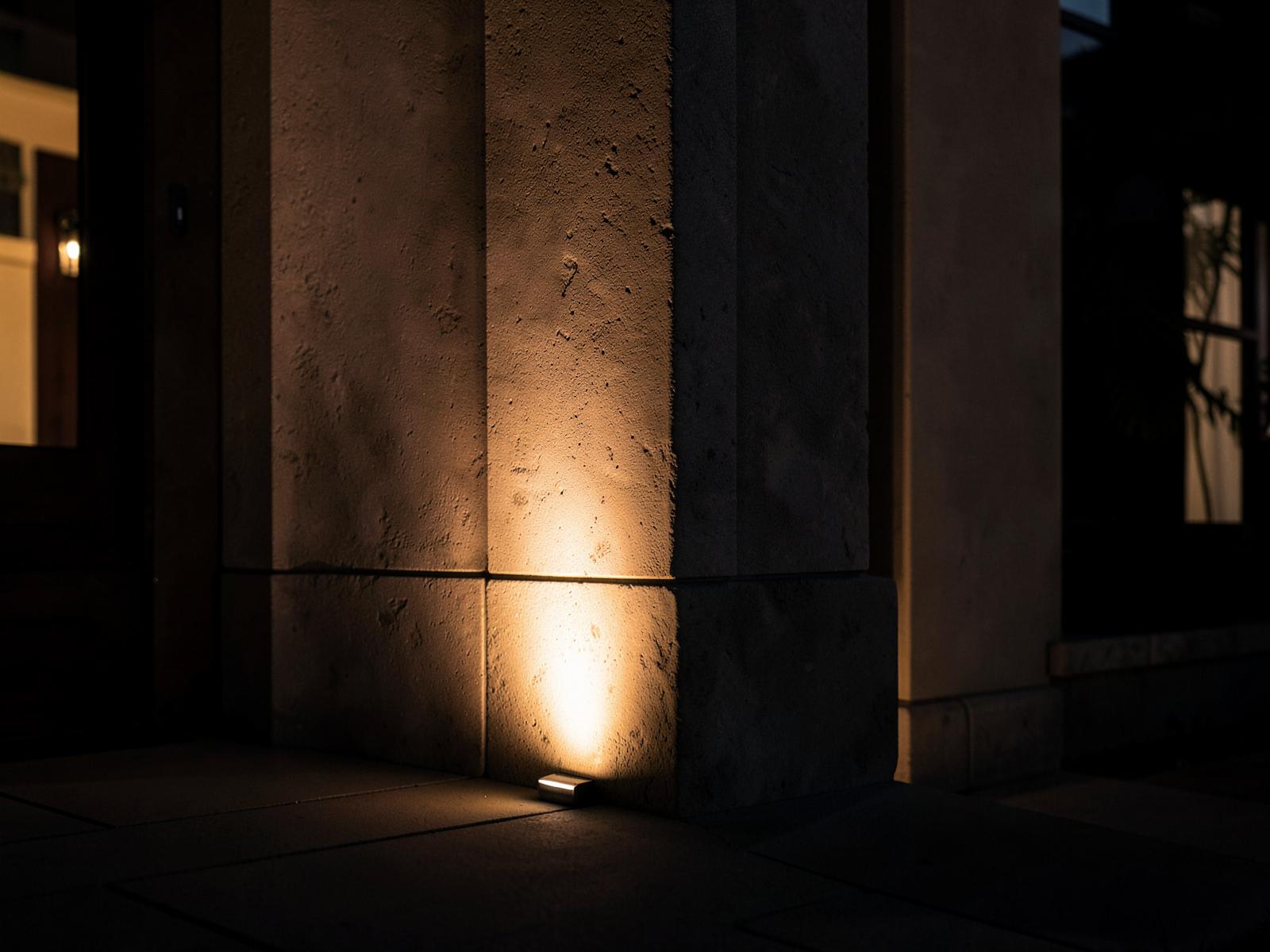
Fixtures placed close to a textured surface create stronger highlights and shadows, making brick, stone, stucco and masonry detail more visible after dark.
- Fixture close to the wall
- Narrow beam
- Maximum texture
Architectural Lighting Beam Techniques
What we light
Lighting Elements Instead of Floodlights
Facades
Even wash or textured graze across the primary elevation.
Columns & arches
Vertical emphasis at entries, porches, and porticos.
Entries
Comfortable, welcoming light at doors and approach paths.
Rooflines & eaves
Definition along the top edge of the structure.
Stone & masonry
Grazing that brings out joint lines and surface relief.
Structural details
Beams, brackets, gables, and signature features.
Materials
Houston surfaces behave differently.
- Brick and stone reward grazing; smooth stucco prefers a softer wash
- Light output and beam angle are matched to surface color and reflectance
- Fixtures, wire, and connections selected for humidity, UV, and heavy rain
- Placement planned around planting beds, drainage, and sightlines
- Low-voltage LED systems with zoning and timer control
Process
How the Design Comes Together
- 01
Site & elevation review
We study the structure, materials, and viewing angles.
- 02
Lighting design
Fixture types, positions, beam angles, and zones are specified.
- 03
Installation
Discreet fixture placement and concealed wire routing.
- 04
Night aiming
Final aiming after dark to set the composition precisely.
Residential
Single-family homes, estates, entries, courtyards, and outdoor structures.
Commercial
Offices, retail, hospitality, and mixed-use properties across Greater Houston.
Pairs with landscape
Facade lighting works best layered with grounds lighting. See landscape lighting.
Pairs with permanent
Add roofline color and scenes with permanent lighting.
FAQ
Architectural Lighting FAQs
Architectural lighting uses precisely placed fixtures to light the structure itself: facades, columns, entries, rooflines, stonework, and structural details.
Washing places fixtures farther from the surface for even, soft coverage. Grazing places them close to the surface to emphasize texture through highlight and shadow.
Yes. Brick, limestone, stucco, wood, and metal each reflect light differently, so fixture placement, beam angle, and output are selected per surface.
Most residential and light commercial architectural systems use low-voltage LED fixtures, selected for output, beam control, and durability.
Yes, and it usually should be. Facade lighting and landscape layers are designed together so the property reads as one composition.
Yes. We design and install architectural lighting for offices, retail, hospitality, and other commercial properties in the Houston area.
Begin the design
Design the elevation at night.
We'll review the structure, materials, and sightlines, then specify a precise fixture plan for your property.