
Outdoor lighting repair · Houston
Find the fault. Then fix the right thing.
Failed fixtures, dark zones, flickering runs, transformer trouble, damaged wire, and timer problems — diagnosed first, repaired second.
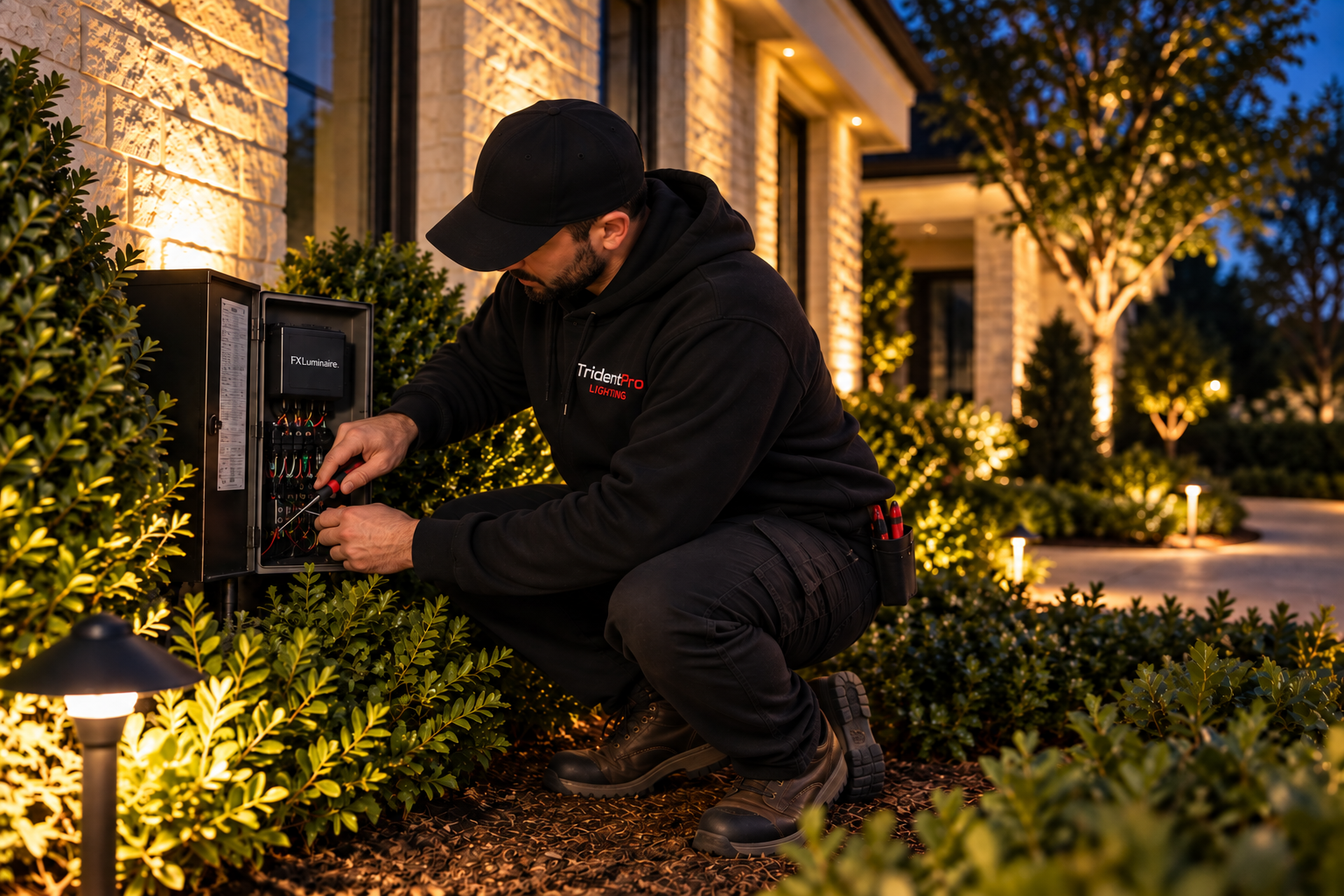
Diagnostic map
From Symptom to Service Path
Start with the symptom
Likely causes
- Transformer not powering the system
- Failed timer, photocell, or control setting
- Damaged main wire run or connection
Service path
Full system evaluation: we test power at the transformer, then work outward through controls, wiring, and connections before recommending any replacement.
Diagnosis always comes first. Some third-party systems can be repaired, others are better served by targeted replacement — we say which after the evaluation.
What we repair
Every layer of a low-voltage system.
Landscape lighting
Failed uplights, buried fixtures, dim beds, damaged bed wiring.
Architectural lighting
Facade grazers, column and entry fixtures, beam realignment.
Pathway & driveway
Path light housings, step lighting, connectors along the drive.
Transformers & wiring
Output, load, splice points, corrosion, and injection issues.
Fixtures & LED upgrades
Compatible professional-grade LED replacements where practical.
Timers & photocells
Schedules, photocells, and compatible smart controls.
Weather & construction damage
Cut wire, storm damage, shifted or mulch-buried fixtures.
Existing system evaluation
Systems installed by other contractors, assessed before any work.
Evaluation first
Repair Before Replacement When Practical
- We inspect fixtures, transformer, wiring, connectors, controls, and zones
- We explain the root cause, not just the visible symptom
- Not every third-party system can be repaired — we say so after evaluating
- Replacement parts are compatible professional-grade components
- Upgrade options are offered, never assumed
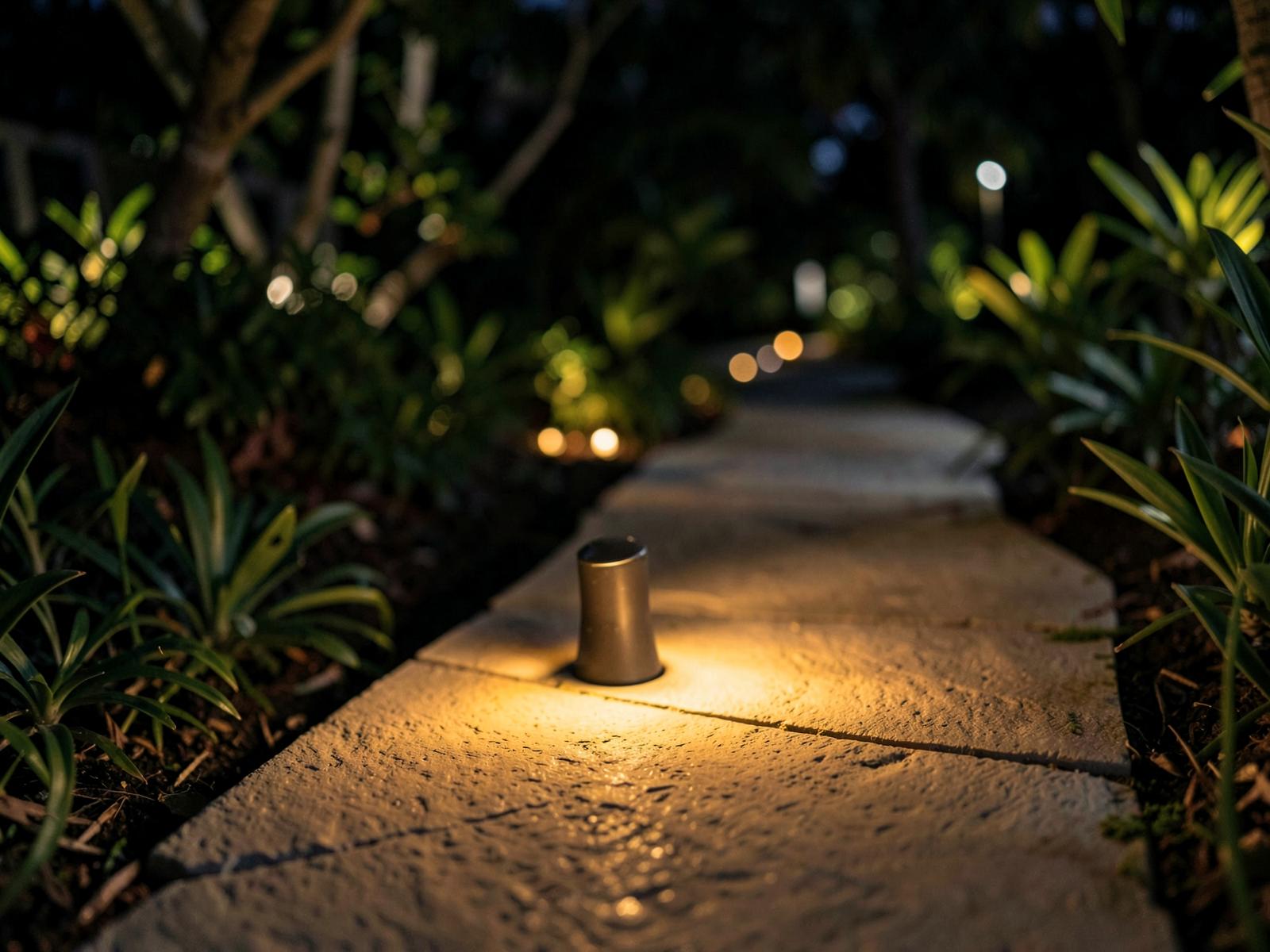
Repair process
Seven steps from dark to working.
- 01
System evaluation
Fixtures, transformer, wiring, connectors, controls, and zones.
- 02
Troubleshooting
Trace the fault to power, wiring, fixtures, controls, or voltage drop.
- 03
Recommendation
The most practical repair, replacement, or upgrade — explained plainly.
- 04
Repair or replace
Approved wiring, connection, fixture, transformer, and control work.
- 05
System testing
Affected zones retested to confirm proper operation.
- 06
Re-aim & reposition
Fixtures adjusted to restore the intended lighting effect.
- 07
Future options
Optional LED, transformer, control, or zone upgrades if the system is aging.
Keep it from happening again
Repair Now or Plan Ahead
Recurring inspections catch loose connections, failing fixtures, and control drift before a zone goes dark.
Who we serve
Who We Service
We repair outdoor lighting for homes, restaurants, offices, retail properties, HOAs, and hospitality sites across Houston and surrounding communities.
FAQ
Outdoor Lighting Repair FAQs
In many cases, yes. We evaluate existing low-voltage landscape, pathway, and architectural systems and tell you what can practically be repaired, what should be replaced, and what is worth upgrading.
Partial outages usually trace back to damaged wiring, failed connections, fixture problems, transformer issues, overloaded circuits, or control settings. Troubleshooting identifies the actual cause.
Voltage drop, poor connections, undersized wiring, an overloaded transformer, aging fixtures, or long wire runs can all cause uneven brightness across zones.
Yes. We locate damaged buried wire and repair or replace the affected sections where practical.
Often, yes. Depending on condition, fixtures, transformers, controls, connections, or selected zones can be upgraded without replacing everything.
Cost depends on the problem, the number of affected fixtures, wiring and transformer condition, control issues, access, and which replacement components are needed. We recommend based on the actual condition of the system.
Begin the design
Get your outdoor lighting working again.
Tell us what the system is doing. We'll evaluate it, identify the source, and recommend the most practical fix.