

Lighted walkways do more than just brighten a path; they create a sense of safety and guide movement by enhancing nighttime visibility. And when thoughtfully planned, they also improve accessibility for all ages and subtly improve the overall design of your space. But to make all this happen, it’s important to think beyond just placing lights along the edges. One should know how the style, spacing, and placement of each fixture should work together to create a look that’s both practical and cohesive.
So, in this blog, we’ll walk you through practical ideas to help you design lighted walkways, but before that, let’s learn about the types of walkway lighting. Continue reading!
Overview: Styling Your Outdoor Walkways SmartlyThe best walkway lighting combines the right fixture type, proper spacing, and strategic placement to improve safety, visibility, and outdoor aesthetics. By balancing light and shadow, minimizing glare, and choosing weather-resistant fixtures, you can create lighted walkways that are both functional and visually inviting while improving the overall ambience of your outdoor space. |
Types of Walkway Lighting and Their Uses
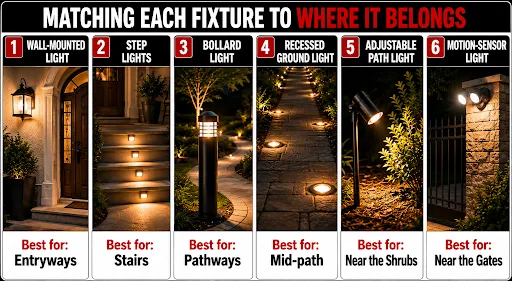
- Bollard lights: They offer 360-degree illumination, making them perfect for guiding movement along wide lighted walkways. Their solid, vertical design also acts as a subtle barrier in open landscapes, blending safety with style. In Houston, sturdy bollard housings also hold up well against the region’s heavy rains and humidity, making them a reliable long-term choice.
- Recessed ground lights: These sit flush with the surface, eliminating trip hazards while adding a clean, modern look. Additionally, they gently mark the path edges by casting light upward.
- Step lights: Usually tucked into risers or side walls, they focus light precisely where it’s needed. This lighting for steps prevents missteps on stairs, especially in low-light conditions, while keeping the fixture discreet.
- Adjustable path lights: Give you control over beam direction, helping highlight curves or uneven terrain. The flexibility they offer is great for tailoring lighting to complex pathways.
- Motion-sensor walkway: These lights activate only when needed, balancing energy savings with security. Ideal for quieter zones, they ensure paths light up just when someone’s there, making it a smart solution among many outdoor walkway lighting ideas.
- Wall-mounted lights: By adding them along paths, they provide low-profile illumination that spreads outward. These fixtures enhance both safety and visibility without disrupting the surrounding aesthetic.
From Door to Gate: Placing Each Fixture Correctly
Remember that knowing the types of walkway lighting is only half the picture; the real difference shows up in where each fixture actually sits. Here’s how these six lighting types come together across a single walkway, from the front door to the garden gate.
Strategic Placement: Balancing Light And Shadow
Light Distribution: Avoiding Uniform Saturation
Instead of flooding your entire walkway with even, uniform lighting, think of light as a tool for storytelling. And one of the most effective pathway lighting ideas is to use narrow beam angles to spotlight only the areas that truly need it, like the walking path itself. For curves, turns, or more architectural sections of your yard, asymmetric light patterns come in handy. They let you bend light creatively around corners without wasting it on nearby landscaping or walls that don’t need to be lit.
Luminaire Height and Its Impact on Shadows
Believe it or not, the height of your light fixtures has a big impact on the overall feel of a space. Besides brightness, it’s about how the light interacts with textures and shapes. For example, if you’re trying to highlight the natural detail of stone or brick underfoot, lower fixtures are your friend. But if you’re aiming for something more subtle, like a calm, evenly lit garden path, taller fixtures work better, as they spread light more gently, softening shadows for a more relaxed atmosphere. Thoughtful placement like this becomes especially valuable when planning lighting ideas for your home in winter, where longer nights call for lighting that’s functional, warm, and visually balanced.
Fixture Placement Relative to Walking Direction
When planning outdoor lighting for walkways, consider how people move through the space, as lighting should guide that movement, not just illuminate it. That’s why placing fixtures slightly ahead of the walking direction, rather than directly overhead, can make a big difference. This creates a more natural, glare-free glow that feels like it’s leading you forward instead of just shining down on you. The placement side to side matters too. Instead of lining lights straight down the middle of a path, which can feel a bit like an airport runway, try shifting them slightly to the sides. This softens the edges, breaks up the visual rigidity, and makes the walkway feel more open.
Shadow Sculpting for Visual Hierarchy
Shadow isn’t the enemy; it’s one of your most powerful design tools. By placing lights thoughtfully near benches, bollards, or ornamental plants, you are shaping the shadows they cast. These shadows add layers to the space, subtly guiding the eye and creating a natural sense of direction.
Glare Control Through Shielding And Louvers
Instead of flooding the area with light, aim to preserve contrast. This means avoiding overexposure and choosing fixtures with built-in shielding or directional louvers. The FHWA Lighting Handbook states that discomfort glare can be greatly reduced by adjusting mounting height and adding shielding to the optical system. These will help direct the light exactly where it’s needed, reducing spill and keeping the surrounding space subtly shadowed. And if you’re wondering how far apart pathway lights should be, the answer depends on the effect you’re after, but spacing them thoughtfully is crucial to avoiding a washed-out look. Done right, you highlight the textures and contours; every cobblestone, curve, and garden edge feels deliberate and defined.
Where safety meets style, smart walkway lighting leads the way.
Common Walkway Lighting Mistakes to Avoid
- Installing fixtures too far apart creates dark spots, compromising safety and diminishing visibility during nighttime movement.
- Using overly bright lights leads to glare, which can blind pedestrians and obscure the walkway rather than enhance it.
- Selecting non-weatherproof fixtures results in faster corrosion or electrical failures. This is a real concern in Houston, where high humidity and heavy seasonal rain can wear down poorly sealed fixtures much faster than in drier climates.
- Positioning lights directly into people’s eyes, instead of downlighting or angled placements, causes discomfort and disorients walkers.
- Ignoring color temperature leads to inconsistent ambiance; cooler temperatures may feel harsh, while warmer tones offer a more welcoming effect.
- Choosing incorrect mounting heights can cast long shadows or limit effective coverage, making paths unevenly lit.
- Relying solely on solar fixtures in shaded or low-sunlight areas causes unreliable illumination and frequent light outages.
- Overlooking luminaire spacing based on wattage or lumen output leads to inefficiencies and patchy lighting coverage.
- Failing to plan for future maintenance access complicates bulb replacements or fixture adjustments, increasing long-term upkeep costs.
Conclusion
Done right, lighted walkways can bring the final, subtle touch to your exterior styling. But achieving this takes more than just good fixtures. It requires a clear vision, thoughtful placement, and an understanding of how light shapes space, which is exactly where the reasons to hire a professional outdoor lighting company over DIY become clear.
So, if you’re ready to take the strategies we’ve explored and turn them into a walkway that feels as stunning as it looks, TridentPro Lighting is here to help. We are your trusted outdoor lighting specialists, providing professional installation and long-lasting solutions tailored to your property’s unique style.
Book your free consultation today, and let us bring your outdoor ambience to life with expertise that truly makes a difference.
FAQs- About Outdoor Lighting for Walkways
How far apart should walkway lights be spaced?
If you are adding small path lights, then place them every 6–8 feet. Taller bollard lights need spacing of 10–15 feet apart, since they cover more ground.
What Kelvin color temperature is best for outdoor walkway lights?
Go with warm white (2700K–3000K) as it looks cozy and inviting. Avoid cool white (5000K+), as it feels harsh and cold.
Do I need a permit for outdoor walkway lighting?
Usually no, if you’re using low-voltage lights. But if you’re wiring lights directly into your electrical panel, you’ll likely need one.
What sort of maintenance do walkway lights need each year?
They need very minimal maintenance/ all you have to do is clean lenses occasionally, check for loose wiring or corrosion, and replace bulbs or batteries as needed.
Can professionally installed outdoor walkway lighting increase my property’s value?
Yes. Professionally installed walkway lighting improves curb appeal, enhances nighttime safety, and creates an attractive outdoor environment that appeals to buyers.