
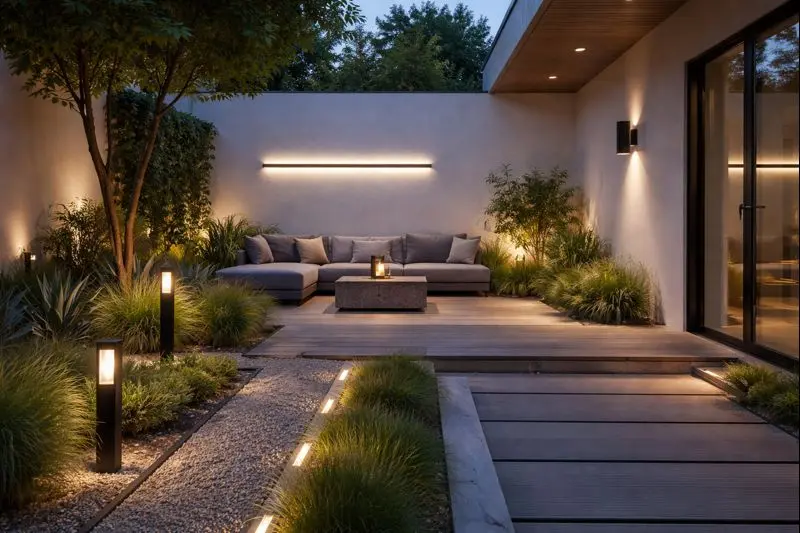
Lighting trends have shifted from flashy, decorative fixtures to designs that focus on intention and clarity. Minimalist lighting for setup uses clean lines, neutral tones, subtle textures, and careful placement to create rooms that feel open, calm, and alive. Low-profile fixtures, simple geometric shapes, and thoughtfully chosen materials help each space feel useful and welcoming. If you haven’t explored minimalist lighting yet, you’re missing the chance to see how the right lighting can change the way a home or workspace is experienced. This blog shows how to pick and place minimalist lighting to make every room feel easy to live in.
Minimalist Lighting: Key InsightsMinimalist lighting focuses on clean, purposeful design, using fewer fixtures with precise placement, controlled beam angles, and high-quality LEDs to enhance both style and functionality. It improves comfort, energy efficiency, and task visibility while keeping spaces uncluttered. From selecting the right elements to maximizing everyday benefits, this approach transforms homes and workspaces into bright, practical, and inviting environments. |
What Makes Minimalist Lighting Different From Traditional Lighting?
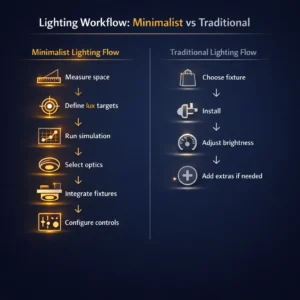
Minimalist lighting and traditional lighting follow fundamentally different design workflows and technical priorities. The distinction lies in how light is calculated, delivered, controlled, and integrated into the built environment rather than how fixtures simply look. Below, we have listed the technical differences for a clear understanding.
| Comparison Area | Minimalist Lighting | Traditional Lighting |
| Design Approach | Illumination is planned first by defining required lux levels, task needs, and surface reflectance before selecting fixtures. | Fixtures are usually selected first, and brightness is adjusted afterward. |
| Optical Control | Uses precision optics like deep-recessed LEDs, anti-glare baffles, and beam-control lenses to manage cutoff angles and visual comfort. | Often uses exposed or shallow-shielded sources, which can produce more visible glare. |
| Planning Tools | Decisions are based on photometric files and lighting simulations to predict beam spread, spacing, and uniformity. | Choices are commonly based on wattage or perceived brightness without detailed simulation. |
| Architectural Integration | Fixtures are integrated using trimless recessing, mud-in profiles, and concealed linear channels so they merge with surfaces. | Fixtures are typically surface-mounted or suspended and remain visually prominent. |
| Control Systems | Uses layered dimming and protocol-based controls like DALI or 0–10V for zoning and scene setting. | Commonly runs on simple on/off switching with limited control flexibility. |
What Characteristics Define a True Minimalist Light Fixture?
A true minimalist light fixture is defined by engineering specifications, optical behavior, and installation method. The defining characteristics below are what lighting professionals actually evaluate.
- Low visual mass and controlled geometry: A minimalist light fixture is designed with a slim, compact profile and clean shape so it visually merges with the ceiling or wall surface. This keeps the fixture from becoming a focal point and supports an uncluttered visual field.
- Deep source regression: The light-emitting element is positioned deeper inside the housing to reduce direct view angles. This lowers Unified Glare Rating (UGR) and improves visual comfort, especially in seated eye-level sightlines.
- Glare control hardware: True minimalist fixtures use optical shields such as honeycomb louvres, black cones, baffle trims, or micro-cell diffusers instead of flat frosted covers that scatter uncontrolled brightness.
- Defined beam angle options: Professional-grade minimalist fixtures are offered with selectable beam spreads (for example, 15°, 24°, 36°, 60°) to match task, accent, or wall-wash requirements rather than one fixed flood pattern.
- Tight color consistency (low SDCM): LEDs are binned within narrow MacAdam ellipse ranges (2–3 SDCM), so multiple fixtures installed together emit uniform color without visible variation.
- Trimless or micro-trim installation compatibility: The fixture supports mud-in, plaster-in, or minimal flange mounting, making it ideal for minimal lighting setups where the fixture blends seamlessly with surfaces and maintains clean, uninterrupted lines.
- High lumen-per-watt efficiency at low wattage: Output is optimized through efficient LED packages and reflector design, so required illumination is achieved without high watt loads or oversized housings.
- Material restraint and finish discipline: Exterior finishes are typically matte black, white, or architectural metal tones with low reflectance to prevent visual distraction and secondary glare.
- Thermal management design: Heat sinks, airflow channels, and housing materials are engineered to maintain junction temperature, preserving lumen output and color stability over time.
What Are the Benefits of Modern Minimalist Lighting for Everyday Living?
Modern minimalist lighting improves daily comfort and usability by delivering technically optimized illumination where it is actually needed. Below are the performance and lifestyle benefits explained in detail:
- Reduced eye strain: Deep-recessed and glare-controlled fixtures lower high-angle brightness, improving visual comfort during reading, screen work, and long indoor hours.
- Task-accurate illumination: Narrow and medium beam optics deliver higher lux levels exactly on work surfaces like kitchen counters, desks, and mirrors instead of wasting output in unused zones.
- Higher color accuracy in daily activities: CRI 90+ light sources improve color judgment for clothing selection, food preparation, grooming, and interior material matching.
- Energy efficiency per usable lumen: Optical control increases effective illumination, allowing lower wattage consumption while maintaining required brightness levels.
- Flexible brightness control: Dimmable drivers and zoned circuits allow output adjustment by activity without changing fixtures.
- Longer service life: Thermal-managed LED modules and remote drivers extend operating hours and reduce replacement frequency.
How Do You Select the Right Minimalist Lighting Elements for a Clean Look?
Selecting the right minimalist lighting elements combines functional effectiveness and seamless visual integration for a clean, unobtrusive look. Below are the key considerations for selecting the right elements:
- Choose concealed linear and cove lighting: Use hidden strip or cove lights to create indirect illumination. Indirect light reduces visual clutter and delivers brightness without exposed hardware.
- Check fixture size and thickness before buying: Review product dimensions and select ultra-slim or compact models. Smaller profiles are easier to integrate without disturbing the minimal design.
- Pick wide and diffused beam distribution: Select fixtures with diffusers or wide beam spreads to produce smooth, even lighting. This prevents sharp light patches that break visual uniformity.
- Use neutral white color temperature: Choose a consistent neutral tone across fixtures to keep the environment visually cohesive and free from color contrast shifts.
- Verify glare rating and shielding features: Check for anti-glare lenses or deep-set LEDs in product specs. Reduced glare keeps the lighting soft and visually comfortable.
Conclusion
Minimalist lighting can completely change the way a space feels, bringing a sense of calm to every corner. If you are looking to bring this simple yet thoughtful approach to your home or workspace, TridentPro Lighting provides expert design and professional lighting solutions that make your home or workspace both beautiful and functional. Contact us today to get a personalized plan and let us help you create a space that truly shines.
FAQs
What is the ideal ceiling height for minimalist lighting?
Minimalist lighting works best in ceilings 8–12 feet high, where recessed, trimless, or linear fixtures can provide sufficient illumination without overpowering the space.
Can minimalist lighting be used outdoors?
Yes, waterproof and weather-rated minimalist fixtures like slim wall lights, linear LEDs, and recessed pathway lights can create a clean, modern outdoor look.
How do I prevent minimalist lighting from making a room feel too cold or empty?
Pair warm color temperatures (2700K–3000K) with layered lighting, combining ambient, task, and accent light, to maintain warmth and comfort without clutter.
Are minimalist light fixtures energy efficient?
Most modern minimalist fixtures use LED technology, which is highly energy-efficient, long-lasting, and produces less heat compared to traditional lighting.
Can minimalist lighting highlight artwork or decor?
Yes, focused narrow-beam or adjustable fixtures can be positioned to accentuate artwork, architectural features, or decor while keeping the overall look minimal.
Is it possible to retrofit minimalist lighting in an existing home?
Yes, many minimalist fixtures are designed for retrofitting into ceilings or walls, though careful planning of wiring, depth, and placement is required for the best result.
Do minimalist lights work well with smart home systems?
Absolutely. Many minimalist LED fixtures are compatible with smart dimmers, motion sensors, and scene controllers for enhanced convenience and energy management.