
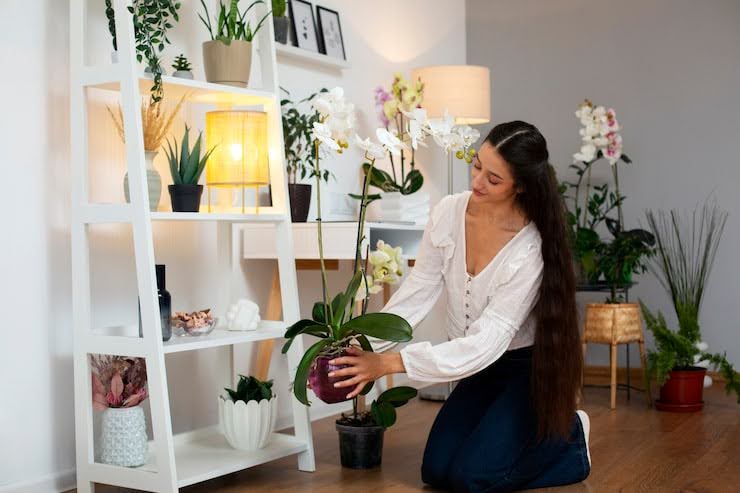
Have you ever purchased a piece of furniture or a plant that looked perfect in the store, only to bring it home and find its color looks entirely different? The reason often lies in the lighting, more specifically, in a metric called the Color Rendering Index (CRI). This metric measures how accurately a light source reveals the true colors of objects compared to natural light. Understanding this concept is essential for anyone looking to create a visually appealing indoor or outdoor space.
Lighting Insights OverviewUnderstanding the Color Rendering Index (CRI) is essential for creating spaces where colors appear true to life. Measured on a scale of 0 to 100, CRI indicates how accurately a light source reveals colors compared to natural daylight. High-CRI lighting enhances the appearance of plants, artwork, textiles, and interior finishes, while low-CRI sources can distort tones and diminish visual appeal. Different lighting technologies vary significantly in CRI performance, with high-quality LEDs offering an ideal balance of efficiency and color accuracy. By selecting appropriate CRI levels, matching color temperatures, and testing lighting options beforehand, you can improve aesthetics, better assess plant health, and create more visually harmonious environments. |
This guide explores what color rendering index is and how it influences everything from your favorite houseplant to your carefully chosen throw pillows. Without any delay, let’s get straight into it!
When lighting brings out the beauty you didn’t know you were missing.
What Is CRI and Why Does It Matter?
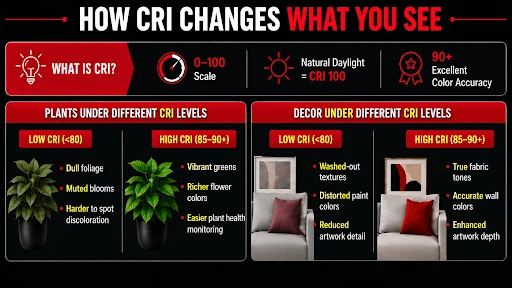
If you’ve ever wondered what the CRI index is, it is a numerical scale from 0 to 100 that indicates how faithfully a light source reproduces colors. Natural daylight scores 100, serving as the benchmark for perfect color rendition. A light source with a CRI of 90 or above is considered excellent, while anything below 80 may distort colors noticeably.
When CRI is high, reds appear rich and warm, and skin tones seem natural. Low CRI lighting, on the other hand, can make colors appear washed out or shift them entirely. A red cushion might look brownish under poor lighting, while green foliage may seem dull and lifeless. This matters more than you might think. Plants rely on specific light wavelengths for photosynthesis, but they also reflect certain colors that signal their health. Similarly, your carefully curated home decor loses its intended aesthetic impact when colors shift under inadequate lighting.
Research published in Lighting Research & Technology suggests that people consistently prefer spaces where colors appear more natural and authentic. The study found that color rendition significantly influences how visually appealing interiors feel, reinforcing the idea that lighting quality affects not only how plants and décor look, but also how we experience and enjoy our surroundings.
How CRI Influences Plants and Decorative Elements
Textiles and Fabrics
Upholstery, curtains, and rugs are often chosen for their color and texture. Under poor-quality lighting, these elements can appear dull or off-tone. A velvet sofa that looks rich emerald green under daylight might take on a muddy hue under a low-CRI bulb. Similarly, patterned textiles with subtle color variations lose their visual interest when lighting fails to render these distinctions accurately. High-CRI lighting (90 or above) ensures that the intricate details in fabrics remain visible. This is especially important in spaces where textiles are focal points, such as bedrooms, living rooms, or boutique retail environments.
Let your plants and décor shine in their true, natural colors.
Artwork and Wall Colors
Art collectors and gallery curators have long understood the importance of lighting quality. A painting lit by a low-CRI source may lose the depth and nuance the artist intended. Cool-toned whites might look gray, and warm tones can shift toward yellow or orange. Wall paint is similarly affected. A carefully chosen shade of taupe can look flat or inconsistent depending on the lighting and CRI rating of your bulbs. Testing paint samples under your intended lighting conditions is a practical step to avoid disappointment.
Plants and Greenery
Plants, both real and artificial, rely heavily on lighting quality to reveal their natural beauty. Under low-CRI lighting, the greens of foliage can look lifeless or bluish, while flowering plants may lose the richness of their petal hues. High-CRI lighting (85 or above) improves leaf texture, natural tones, and bloom vibrancy, allowing plants to appear healthy even after sunset. For interior landscapes or decorative planters, this helps you better assess plant health and detect early signs of discoloration or stress.
Comparing CRI Across Light Technologies
Incandescent Bulbs
Traditional incandescent bulbs score near 100 on the CRI scale, providing exceptional color accuracy. Their warm, continuous spectrum closely mimics natural light, making them ideal for displaying artwork and decor. However, their energy inefficiency and short lifespan have led to their gradual phase-out in many markets.
Fluorescent Lighting
Standard fluorescent tubes typically range from 50 to 75 CRI, producing noticeable color distortion. Objects under basic fluorescent lighting often appear pale or tinged with green. However, high-CRI fluorescent options (90+) are available, though they cost more and may sacrifice some energy efficiency.
LED Technology
LEDs offer the widest CRI range, from below 70 to above 95. Basic LED bulbs (CRI 70-80) provide adequate illumination for general purposes but struggle with color accuracy. High-CRI LEDs (90+) rival incandescent performance while maintaining excellent energy efficiency and longevity. The key lies in the LED’s phosphor coating, which converts blue light into a broader spectrum. Premium LEDs use advanced phosphor blends to achieve superior color rendering across all wavelengths, particularly in the red spectrum where many cheaper LEDs fall short.
Full-Spectrum Lighting
Full-spectrum bulbs attempt to replicate natural daylight’s complete wavelength distribution. While they often feature CRI ratings of 90 or higher, the term “full-spectrum” isn’t standardized and doesn’t guarantee quality. Always verify the actual CRI rating rather than relying on marketing claims. For plants, full-spectrum lighting with high CRI provides both the wavelengths needed for photosynthesis and the color accuracy required for visual monitoring. This makes them particularly valuable in indoor growing environments where natural light is limited.
Tips for Maximizing Visual Impact with Lighting Fixtures
- Layer Your Lighting: Combine ambient, task, and accent lighting with consistent high-CRI lighting sources. This approach prevents color shifts between light sources and creates depth throughout your space.
- Match Color Temperature: CRI measures color accuracy, but color temperature (measured in Kelvin) affects mood. Warm white (2700-3000K) with high CRI suits living spaces and displays warm-toned decor beautifully. Cool white (4000-5000K) with high CRI works well for task areas and brings out cooler colors in artwork and textiles.
- Consider Dimming Capabilities: Some high-CRI LEDs maintain their color accuracy when dimmed, while others shift in color temperature. Choose dimmable bulbs specifically rated for consistent CRI across their dimming range.
- Test Before Committing: Purchase sample bulbs to evaluate how they render your specific decor and plants before buying in quantity. Colors that look perfect under one high-CRI source might appear slightly different under another brand with the same rating.
Real colors. Real impact. The power of better lighting.
Conclusion
While fixture style and color temperature play key roles, understanding what CRI in LED lighting means is essential. High-CRI lighting brings out every detail, from fabrics and artwork to plants and finishes, revealing their true vibrancy and depth. For homeowners, designers, and businesses seeking premium high-CRI lighting solutions, TridentPro Lighting offers expertly engineered LED options that deliver both performance and visual perfection. You can also explore our guide on essential ways to maintain your outdoor lighting system to ensure lasting brightness, efficiency, and color accuracy in every corner of your home or landscape.
FAQ’s
Will high-CRI lighting help me spot problems with my houseplants sooner?
Yes. Accurate color rendering makes it easier to notice yellowing leaves, browning edges, and other early signs of plant stress.
Is there a recommended CRI range for showcasing indoor plants and statement decor pieces?
A CRI of 90 or higher is generally preferred for spaces where accurate color presentation is a priority.
Can CRI affect how realistic faux plants appear in my home?
Yes. Accurate color rendering enhances depth and variation in artificial greenery, making it blend more naturally with real plants.
Is CRI worth considering for holiday decorating and seasonal styling?
Definitely. Decorative lighting can influence how festive colors, ornaments, and greenery are ultimately perceived.
Why do lighting recommendations differ between plant enthusiasts and interior designers?
Plant-focused recommendations often prioritize biological needs, while design recommendations emphasize visual presentation and aesthetic cohesion.
Can lighting choices affect the resale appeal of a home?
Well-lit interiors that accurately showcase architectural details and decorative elements can leave a stronger impression on prospective buyers.